Bay Area Premiere of WOOD STREET Directed by Caron Creighton
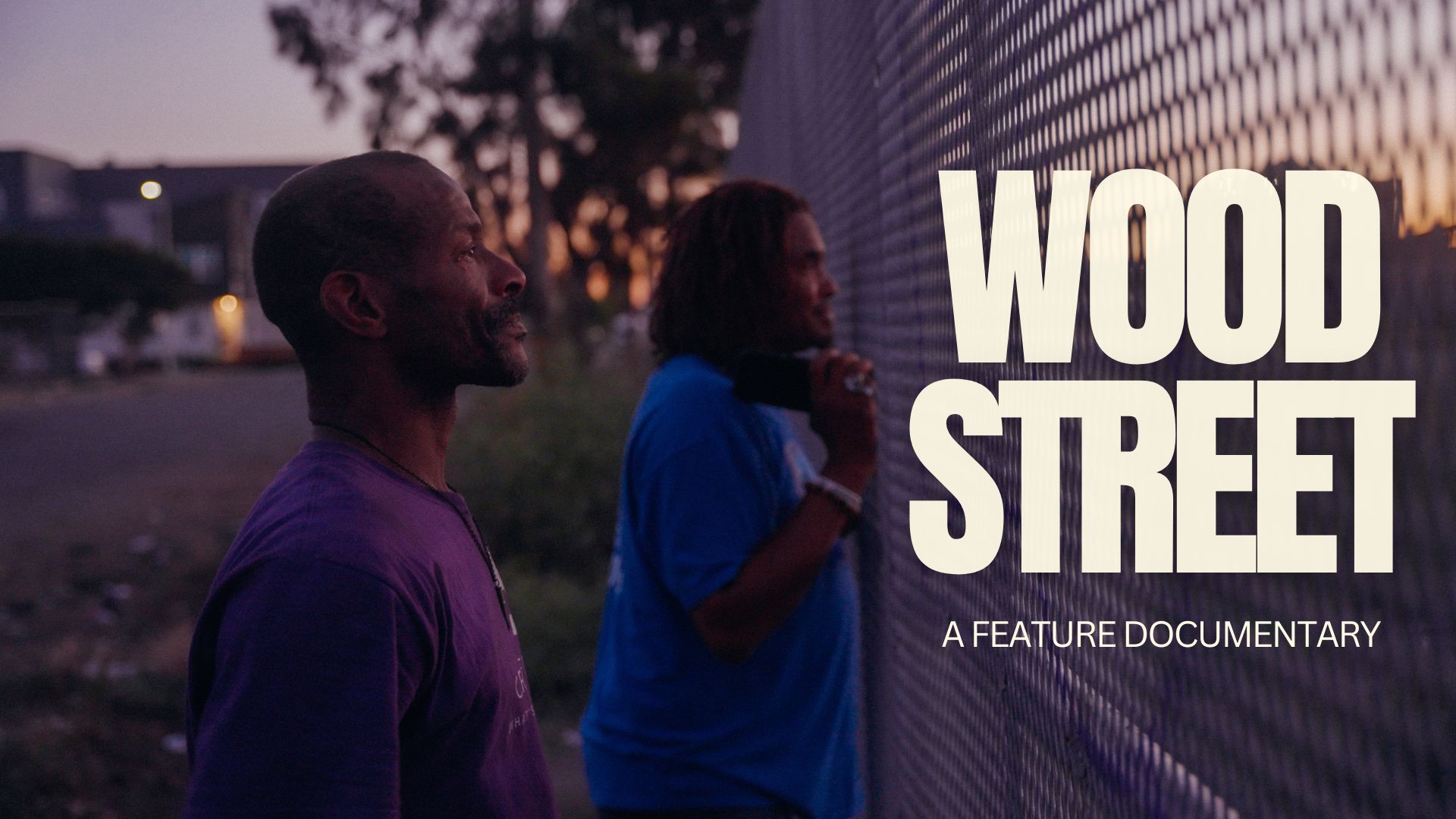
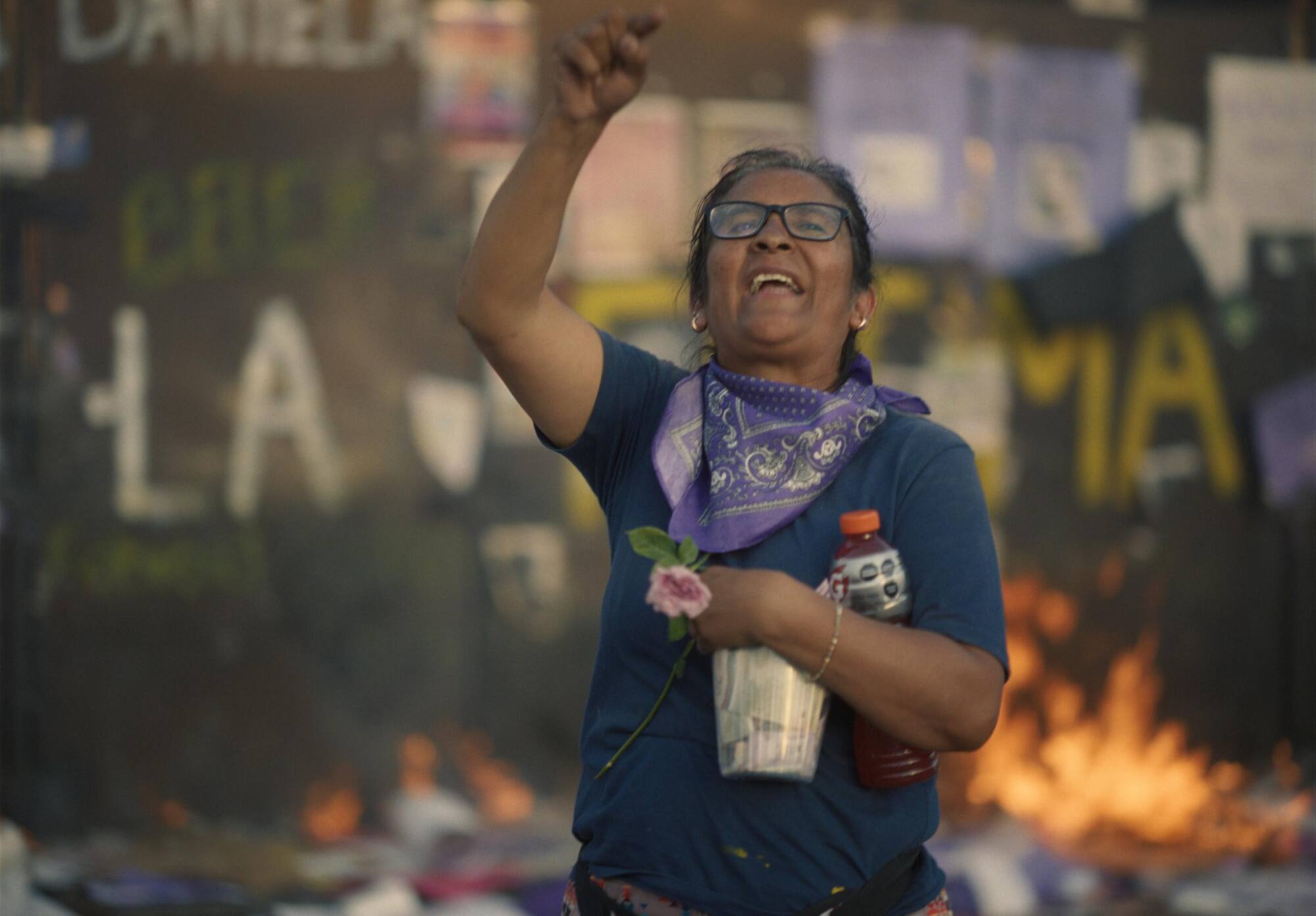
Caron Creighton’s (BAVC Media 2024 MediaMaker Fellow ) feature documentary, Wood Street, is having its Bay Area premiere at the 25th San Francisco Documentary Festival at the Roxie Theater on Sunday, May 31. The screening is currently sold out, but follow Wood Street on Instagram to stay updated on new screenings. The film follows a year in the life of Oakland’s largest unhoused encampment as residents fight against an imminent eviction threatening to dismantle their community. Told through immersive verité, the documentary captures the urgency, resilience, and emotional toll of collective resistance through the experiences of John and LaMonté. Their bond is tested as mounting pressure, mental health struggles, and addiction collide in the face of displacement.
Creighton is a Black, biracial award-winning journalist and filmmaker whose work has focused on displacement within the African diaspora, including reporting on Eritrean migrants in Israel, West African migration through Latin America, and the Bay Area homelessness crisis. She has worked for The Associated Press, AJ+, and The San Francisco Chronicle, and was a Pulitzer Center grantee. Creighton is also a 2023 and 2024 SFFILM FilmHouse Resident, a 2024 Big Sky Pitch participant, and earned her master’s degree from the UC Berkeley Graduate School of Journalism.
If you’re heading to the 25th San Francisco Documentary Festival this weekend, also be sure to check out the Panel: The Pitch is a Bitch: Getting to ‘Yes’ in a World of ‘No’ on Saturday, May 30 with Dawn Valadez, BAVC Media’s Director of Workforce & Artist Development.
Read the full interview below. It has been edited for length and clarity.
Tell us what your film, Wood Street, is about?
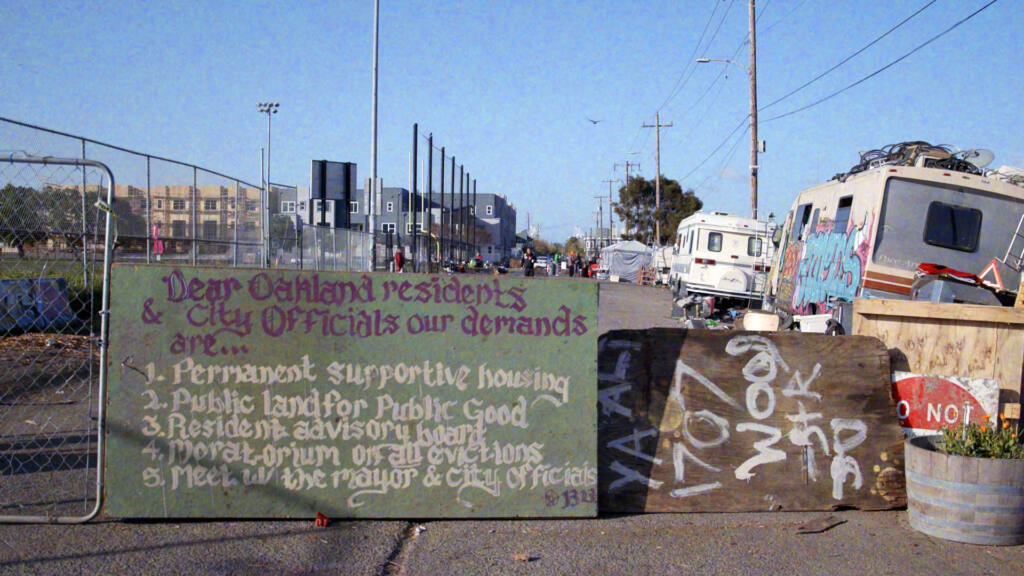
Wood Street is a feature documentary that follows members of Oakland’s largest homeless encampment as they organized to fight their eviction. It focuses on two main people, John, and LaMonté. Who are kind of the main organizers in this community, but also face their own individual struggles, both interpersonally. In the process of organizing LaMonté struggles with some mental health issues in the film, and John struggles with issues around drug use and sobriety. The film shows these different systemic issues at play.
What role has BAVC Media played in your filmmaking journey?
BAVC Media has been incredibly supportive throughout my filmmaking. I was a MediaMaker Fellow in 2024 and that program was incredibly supportive. The funding they provided for travel to film festivals, the industry connections. A great cohort of other filmmakers to share ideas with.
And to receive feedback from BAVC was the best program and so incredibly supportive. And then, since I’ve finished the filmmaking process I’ve been teaching at BAVC as part of the PG&E Better Together Fellowship. It’s been a really important support for me as a filmmaker who freelances and needs work. Not to mention just the giant community that BAVC creates around itself, getting to constantly meet other filmmakers. They have just been the best filmmaking community that I could ask for.
How did the Bay Area filmmaking community support or influence your approach to your film?
Pete Nicks has his Bay Area Oakland Trilogy films. All three vérité documentaries that focus on different aspects of Oakland, and I’m also making a vérité film in Oakland. So I definitely revisited his films before or in the early stages of working on mine. Also, for me, being a filmmaker who comes from journalism, I was kind of learning what distinguishes documentary from journalism, thinking about how vérité plays into that. I don’t want to do any interviews. I really wanted to avoid the typical tropes that are in homelessness documentaries. That feature quote unquote experts on homelessness, but none of those experts are ever homeless people.
I really wanted to make something that would let the audience really feel what the Wood Street Community was feeling. The stress and anxiety that they were going through. And also not include these outside, unnecessary voices. The Wood Street folks are experts on their own experience. I really want to emphasize the work they’re putting into it. All of the labor that they do, the self-accelerated work they put into it. As experts on their own experience, as people who want to advocate for themselves and organize to better their own lives.
Plenty of people stopped by during the Wood Street eviction to help me film because those were really stressful days with a ton of different factors going into it, including restrictions on press and advocates accessing the site during the eviction. So, I really leaned into my Bay Area Community folks to help me film during that process.
Beyond just the filmmaking community, I think of the film and how it exists in relation to some of these other historic things that have happened in the Bay Area. Throughout the film, there are these little homages, throwbacks to the Black Panther Community. I think it’s important to think about Oakland’s revolutionary history when thinking about the work that’s going on today.
It was kind of about showing in West Oakland, specifically, where the Black Panthers originated. There is still this community of Black folks, primarily who are struggling and struggling for their place in the community, and it felt really important to me to show that. And I think that was not just the filmmaking community, but the Oakland community in general that influenced at least that part of the storytelling for me.
Can you describe the journey of bringing Wood Street from concept to final cut?
I met the Wood Street community when I was working as a multimedia producer for The Chronicle. I did a couple of podcast episodes on the Wood Street community at the time, and a video, and that was really cool to get to know the community without a camera.
A lot of the time, I was able to share the podcast with these folks and get their feedback on it and learn how they preferred being represented, and figure out how that, you know, would influence my reporting on it, and also kind of began to see them as experts on their own experiences, too, within this process.
It was summer 2022, and the Wood Street community was taking the state of California to court, and they were sitting under this giant Highway overpass at these little picnic tables Zooming into the court hearing. And I just thought it was so powerful that they got lawyers, they are taking the state to court.
There’s a judge who’s hearing their side of the story, and that was something that I hadn’t really seen before in the unhoused community. It doesn’t mean it hasn’t happened, but I had not witnessed it personally. And so, I was really moved and drawn in by that. I’m really seeing people take their power back in this way, and so I knew that it was a story that I wanted to follow further.
Around this time, I’d worked at the Chronicle for about four years. I was kind of ready to move on, and so it just worked out for me that I was able to quit that job and buy a cinema camera and really invest in telling this story. I didn’t know at the time that it would be a feature documentary. I kind of was just like, maybe it’s a short. Let’s see what it is. It ended up being that I wanted to tell the longer story and really follow them through the eviction and tell the story within that time frame of this community fighting their eviction.
What were some of the biggest challenges?
Funding has always been a process, like a really huge challenge, and organizations like BAVC have helped me learn how to navigate the grant system, the film world, way more successfully and fundraise for the film almost entirely through grants. Basically, I was able to complete the film because I had a hand in pretty much every aspect of it. I filmed it myself. I edited the bulk of it and produced a large fundraiser for all of it.
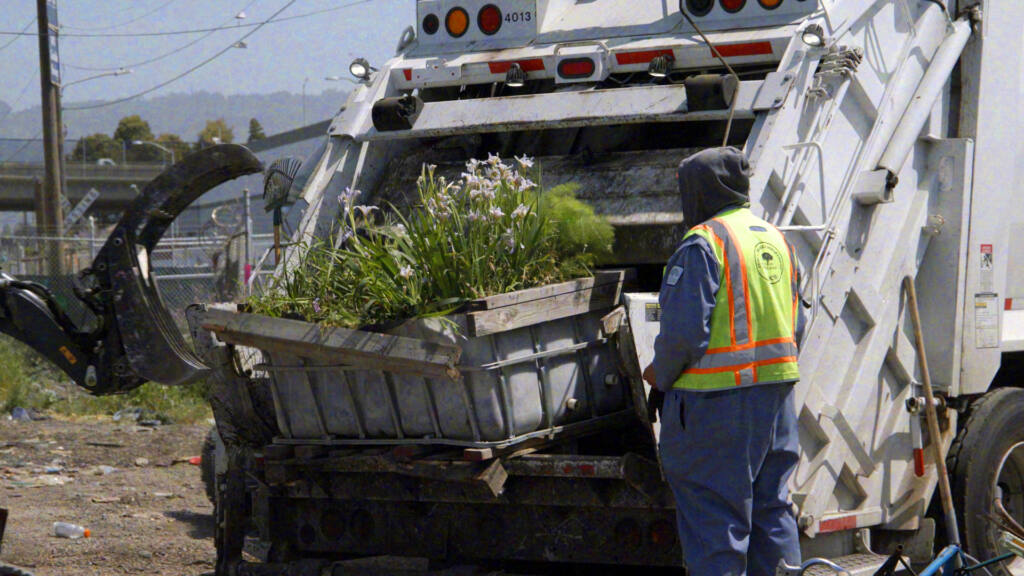
Those were huge challenges. And of course, during the final eviction of the community the police at some point created this huge barrier, preventing advocates and trying to prevent press from getting in. I would wake up at four or five in the morning every day during the eviction, sneak across police lines to make sure that I could continue telling the story. At that point, I had been filming with the community for several months, and I was not willing to not be there for the eviction.
I didn’t know most days if I was going to be arrested what was going to happen. But I was determined to show this side of the story that rarely gets told. And also, recognizing that this was an eviction that had so much more press on it, so many more eyes on it, so much more use of police force. It felt really important to me, critical to be able to show this side of what happens to unhoused people, and what happens when people try to fight for their community against all odds. Lots of challenges.
What do you hope audiences take away from Wood Street?
This is the first time we’re showing the film in the Bay Area. We’ve shown it in a couple of film festivals around the country so far, and it feels like people often take away a great sense of community from Wood Street, and I think often feelings about unhoused people, have feelings about their own sense of community, and maybe lack of community, and seeing the strong community that the Wood Street folks were able to build for themselves.
This film is deeply immersive and observational. How did you build trust with residents while filming?
Part of the trust building process was definitely the couple years of slow reporting and slowly getting to know the community before I started filming, that absolutely helped. So I had people who had seen my reporting and were repping for me when I started filming.
It was really just a lot of time. Coming to the community at a certain point almost every day more than once a day. Arriving, being willing to put the camera down plenty of times and just kind of be with people. Really showing up for people and doing what I could to support within the journalistic and documentary ethics and rules that this film exists within. I think it was important to build friendships with people, really to help build trust and continue the process, and also just trying to be as transparent as possible throughout.
Like [saying] you know, I don’t know where the documentary is going to end up.I don’t know all of these things, but this is what I do know and I’ll update you when I get more information. I’m just really trying to be as transparent as possible, as I was learning the process myself too.
What assumptions or perceptions about unhoused communities were you hoping to challenge through the film?
Hoping to uplift unhoused people as experts on their own experience is kind of number one here. And it helps now that Wood Street folks have gone on to build their own non-profit Wood Street Commons where they continue to work with unhoused communities in Oakland. And I think the film, hopefully, is a tool that they can use to benefit their own work.
John and LaMonté are anchors of the story. What drew you to their relationship specifically?
I think John and LaMonté were natural main participants in the film. John fell into the organizer position because he is so good at organizing events and bringing people into the space and bringing the community together, and LaMonté is someone who kind of wears his heart on his sleeve and is upfront about his feelings.
When people meet him in person, he draws you in immediately. I think it was interesting for me to try to have the film talk a little bit about some tensions in their relationships, some of the tensions around organizing a larger community. But also, the kind of street family that people form in these types of communities, and how those bonds can be really lasting.
Vérité filmmaking can create ethical questions around documenting vulnerable moments. How did you navigate those decisions throughout production?
There are definitely vulnerable moments in this film. I would say the moments that I thought were the most vulnerable [and then] I’ve asked John and LaMonté after the film has been done, and they kind of think that other moments were more vulnerable, so it’s been really interesting doing that. I often showed them scenes from the film after I filmed them. John specifically was always like, I want you to get the gritty stuff in the film, and even sometimes I would put my camera down for certain things, and he’d be like, afterwards, “Well, why didn’t you film that?”
And I was, like, well, I’m trying to like, respect you, you know? It helped encourage me that it felt like he and others in the community really deeply understood the purpose of why I was there and respected that, which helped me feel comfortable filming more of these vulnerable moments.