BAVC Media at Sheffield DocFest 2026 with Dawn Valadez
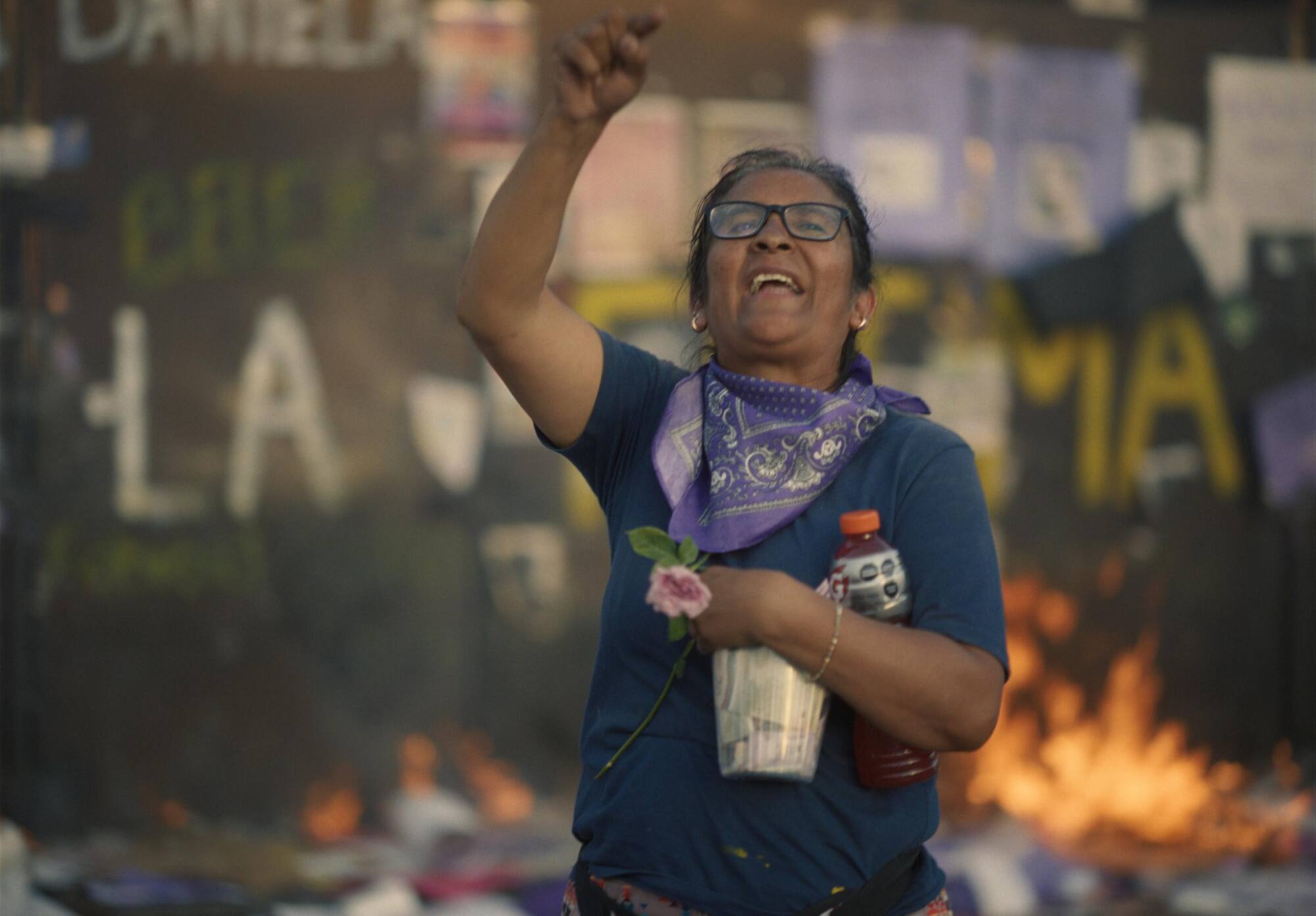
Last month, Dawn Valadez, BAVC Media Director of Workforce & Artist Development, traveled to Sheffield DocFest, one of the world’s leading documentary film festivals. Her latest film, Querida Fátima, co-directed with Rodrigo Reyes as part of Colectiva Varinia, screened for international audiences. While there, Dawn also represented BAVC Media’s MediaMaker Fellowship at the MeetMarket, connecting with emerging filmmakers, funders, and industry leaders from around the world.
We caught up with Dawn after the festival to hear about the projects and conversations that stood out, the advice she has for filmmakers attending the MeetMarket, and how the connections made at Sheffield help strengthen BAVC Media’s support for documentary filmmakers at home and abroad.
What brought you to Sheffield DocFest this year, and what were your goals going into the festival and MeetMarket?
Sheffield DocFest is one of the largest international documentary festivals in the world. Three years ago, Rodrigo Reyes, 2017 MediaMaker Fellow and former Co-Director of the BAVC MediaMaker Fellowship, Su Kim, one of our producers, and I (myself, a 2012 MediaMaker Fellow attended the Sheffield MeetMarket with our film Querida Fátima and met with many wonderful distributors, funders, and other industry people. Rodrigo had premiered his MediaMaker Fellowship film Sansón and Me at Sheffield in 2022. We were excited to return to the festival to screen our completed film Querida Fátima to international audiences.
BAVC Media’s Artist Development and MediaMaker Fellowship program was invited to participate in the MeetMarket to meet with potential US-based, first-time, feature documentary filmmakers with projects in production. I met with 6 projects that qualified for our program, and I encouraged them to apply for the MediaMaker Fellowship.
Were there any recurring topics, storytelling approaches, or funding conversations that stood out?
Many of the films and pitches I saw were direct responses to the rise in fascism around the world, taking a de-colonial approach to filmmaking and addressing the violence in our communities. Films were close-up stories of families and activists sharing love and community care while demanding justice. They were creative, hybrid, powerful messages of resilience and action. The stories were often made by the people of the communities they documented (as opposed to being extractive). Personal stories of family, grief, and love were strong participants in the festival.
Conversations of the media mergers, consolidation of money and power, especially in the US, and finding distribution around the world continue to be hot topics. Raising money for films has always been difficult, but right now the challenges seem insurmountable. Debra Zimmerman of Women Make Movies and Ryan Harrington, producer and strategist, shared words of wisdom and hope. Their messages were about not giving up, being clear with your messaging, and paying attention to funders’ selections. The Palestinian Film Institute shared projects by Palestinians and people in solidarity with them to continue to put pressure on the global film community. These stories and others continue to be strong contenders in this global market.
What advice would you give filmmakers going to the MeetMarket next year?
The MeetMarket is a fast-moving environment. Most filmmakers get to meet with 5-15 industry representatives. It can feel like an intense speed dating experience. So just like those experiences, here’s my advice:
- Be prepared – bring a sample of your film (3-5 mins), a beautiful pitch deck, materials, and a flyer or postcard to share. You don’t have to memorize your logline, but you do need to know your story and be ready to answer questions. Don’t forget a headset and cleaning wipes for people to listen to your sample (clean after each use!).
- Don’t take anything personally (unless the person is mean, then end the session) – the industry representative is meeting with anywhere from 5-30 projects in 2 days; they may be jetlagged, tired, or distracted. Give them the info they ask for and be polite and considerate.
- Know who you are talking to – do your research – who is the Industry Rep? What is their organization? Why is your film a good fit for them? One of the people I met with who had a great film recognized that they may not be able to apply to our program with this film. They recognized this, shared another film, and we had a wonderful conversation about why we make documentaries. I will remember that person, and their project for a long time. I am already thinking about other funders for them. Make sure you follow up after you return home!
And finally… - Trust yourself…you are making this film because it is important to you. Trust that, and you will shine.
Did you run into any BAVC Media alumni, fellows, or community members while at Sheffield DocFest?
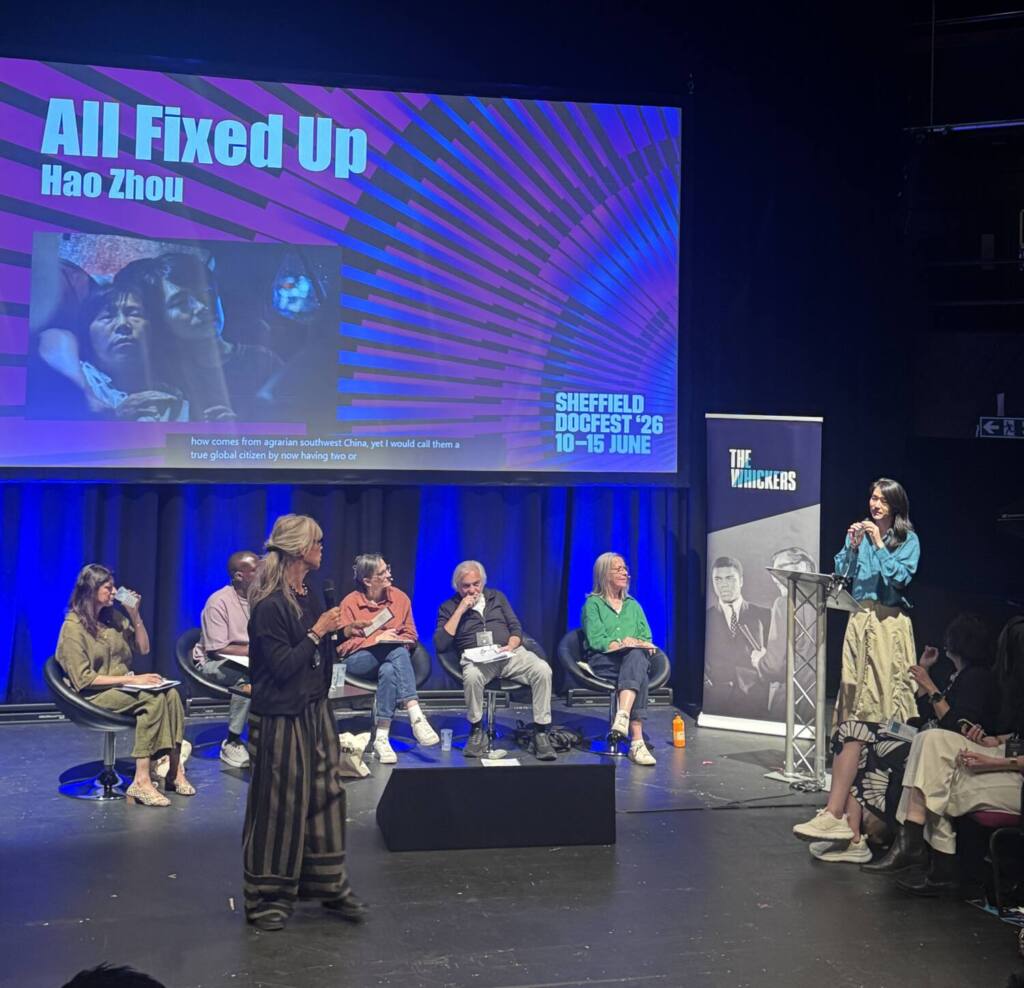
It was so exciting to be at Sheffield because not only was I there to represent the collectively directed film Querida Fátima with my friend and colleague Rodrigo Reyes, I also got to represent BAVC Media at the MeetMarket and meet emerging filmmakers.
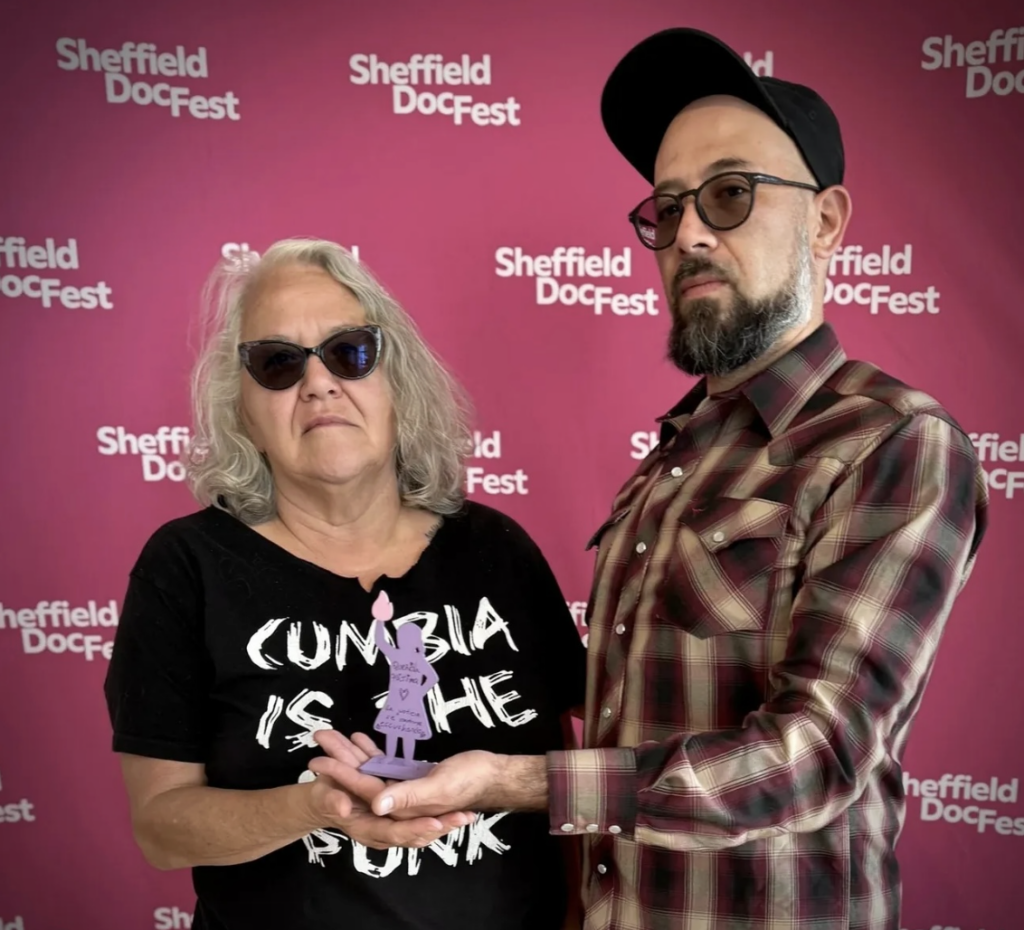
It was exciting to see Gabriela Díaz Arp’s (MMF ‘22) film Matininó premiere in England, watch Hao Zhou (MMF ‘25) pitch All Fixed Up to an international audience, hang out with Anna Claire Spellman (MMF ‘25) whose project Meant to be Maddie is in post-production, as well as with their editors and teammates. Tracy Rector of 4th World Media was at the festival with film Kikuyu Land. Set in Kenya’s tea highlands, Kikuyu Land follows Mr. Mungai, a local land claimant pursuing justice for land taken from his family.
I was grateful to see a friend and colleague, William Caballero, screen his Sundance-winning film, They Dream, about his relationship with his mother and Puerto Rican family in a documentary with both live action and many different types of animation styles. I also was blown away by A City In the Forest about the activists working to Stop Cop City outside of Atlanta by first-time filmmakers Lev Omelchenko & Nolan Huber-Rhoades, producer Ike Rofe, and editor Emily Yue. Truly a message for our times.
What lessons or ideas are you bringing back to support our community of filmmakers?
Documentary film is alive and well! People around the world want to watch authentic stories by and about communities that are facing challenges with hope and resilience. Intimate portraits and personal stories are still viable and important. Authorship matters – “why are you the best person to make this film?” is a real question filmmakers need to answer clearly. Being bold, experimental, and taking risks continues to be important. Hybrid, animation, and experimental techniques had a strong showing, but so did solid verité, journalistic, and character-driven films. Find the best tools to tell your story and go for it!
Raising money continues to be a challenge, but funds and funders are out there who care about documentary film. Getting out to film festivals, filmmaker gatherings, and meetups is important for networking and staying up to date on what’s happening in the field. Things are constantly changing, but building your social capital remains a critical skill for filmmakers.
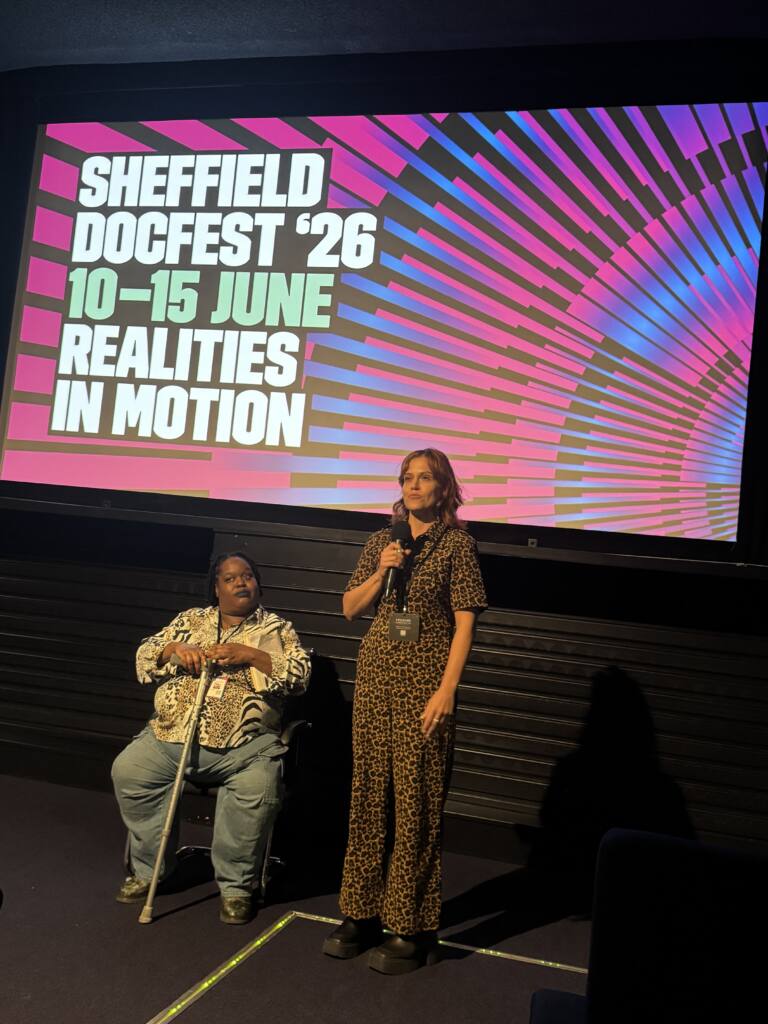
What does it mean for BAVC Media to have a presence at an international festival like Sheffield? How do these global connections benefit our filmmakers and the broader BAVC community?
Meeting with filmmakers at the Sheffield MeetMarket was important in sharing the program and opportunity to filmmakers we might not reach otherwise. I spoke with filmmakers who had projects focused on Antarctica, Eritrea, Greece, and Palestine, as well as New York, Puerto Rico, and Colorado. To qualify as a BAVC MediaMaker, you must be a first-time feature documentary director based in the US. But your film topic or subject does not need to be US-focused, and many filmmakers at BAVC Media have their story origins outside of the US. We are an international program despite the limitations of those qualifications.
Meeting with funders and distributors from England, France, Spain, Argentina, and Colombia, attending films from around the world, and workshops and pitch events allowed me the opportunity to understand the rapidly changing landscape of documentary film so that I have firsthand information for our MediaMakers, Connect participants, and anyone else seeking support in this industry.
Documentary filmmaking can be an international endeavor, and BAVC Media is following the international trends while standing by our independent makers to create the films they want to make.